
A Room-by-Room Guide
Introduction
There is nothing quite like walking into a new space and feeling the rush of possibilities. A new couch, a fresh color palette, little décor touches that make it feel like home. The excitement is real, but so is the overwhelm.
But then reality sets in. Where do you even start?
I put together this guide to take the guesswork out of setting up your new apartment. We’ll go room by room, starting with what matters most, so you can build a space that works for how you live and still looks great. Let’s get into it.
Step 1: Start with the Essentials
Before you think about décor, make sure you have the basics covered. These are the things you’ll reach for on a day-to-day basis, and trust me; you don’t want to be searching for a shower curtain at midnight after a long move.
If you’re moving from one apartment to another, you’ve probably got most of this already. But if this is your very first apartment, here’s a quick checklist to get started:
Kitchen
- Pots, pans, and a skillet
- Utensils, plates, bowls, cups, and glasses
- A cutting board and a good knife
- Basic spices and oils
- Dish soap and a sponge
Bathroom
- Shower curtain and rings
- Bathmat and towels
- Hand soap, toilet paper, and daily toiletries
Bedroom
- Bedding, sheets, pillows, a comforter
- Hangers for your closet
Cleaning
- All-purpose cleaner, mop or Swiffer, broom or vacuum
- Trash bags and a trash can for each room
Once these are in place, everything else becomes a layer on top, not a necessity.
Step 2: Set Up Your Bedroom First
I know it’s tempting to tackle the living room first, but setting up your bedroom early is one of the best things you can do for yourself. You need rest to make good decisions, and you’ll be making a lot of them over the next few weeks.
When placing your furniture, start with the largest piece (your bed) and work outward from there. Think about how you naturally move through the room (getting in and out of bed, opening your closet, walking to the window). Arrange everything so those paths feel easy and unobstructed. A room that flows well just feels better to be in.
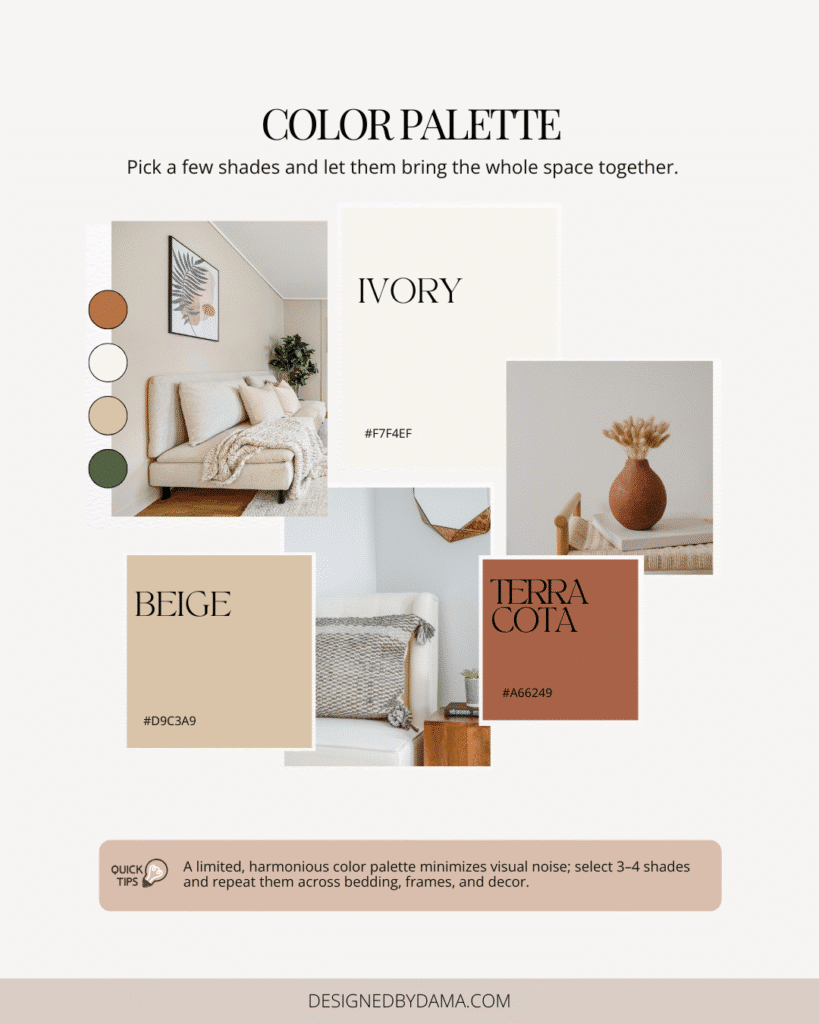
Once the furniture is settled, think about color. Your bedroom should feel like a sanctuary, so lean toward calm and soothing tones. A good rule of thumb: stick to 3 to 4 colors, a main color, a secondary, and one contrast. More than that and the room can start to feel busy. Free online color palette generators are great for testing combinations before you commit.
Step 3: Create a Functional Kitchen
The kitchen doesn’t need to be elaborate to work well. The goal is simple: keep what you use most within easy reach.
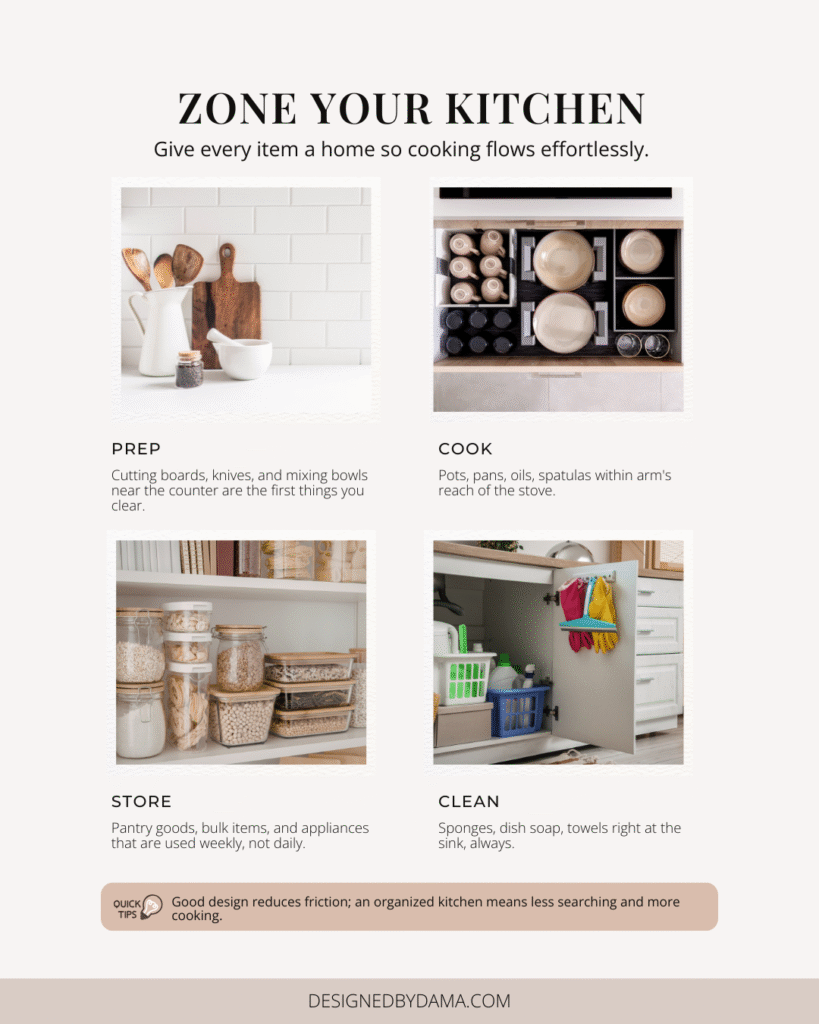
Group things by how you use them. Pots and pans near the stove, spices and oils right alongside them, plates and glasses near the sink or dishwasher so unloading is effortless, and cleaning supplies under the sink. When everything has a logical home, cooking and cleaning become so much easier. Once the function is sorted, you can layer in your personality by adding things like a small plant on the counter, a pretty dish soap dispenser, or a coordinated set of canisters.
Step 4: Get Your Bathroom Ready for Daily Life
Like the kitchen, function comes first here. Start with the essentials: a shower curtain if you need one, a bathmat, your daily toiletries, and cleaning supplies. Once those are in place and organized, you have a working bathroom.
Store your everyday items (skincare, toothbrush, hair tools) in the cabinet or on the shelf you’ll naturally reach for each morning. Then add the finishing touches: a small tray to hold your soaps, a candle, or a simple piece of art that makes the space feel intentional rather than purely functional.
Step 5: Furnish Your Living Room Slowly
If you’re starting fresh in the living room, don’t rush it. This is the most visible space in your home and worth taking your time with.
Before buying anything, grab some painter’s tape and map out where your furniture will go directly on the floor. Mark out the footprint of your sofa, coffee table, and TV stand. It sounds simple, but it completely changes how you plan; you can try different configurations without moving anything heavy, and you’ll avoid buying pieces that don’t actually fit the space.
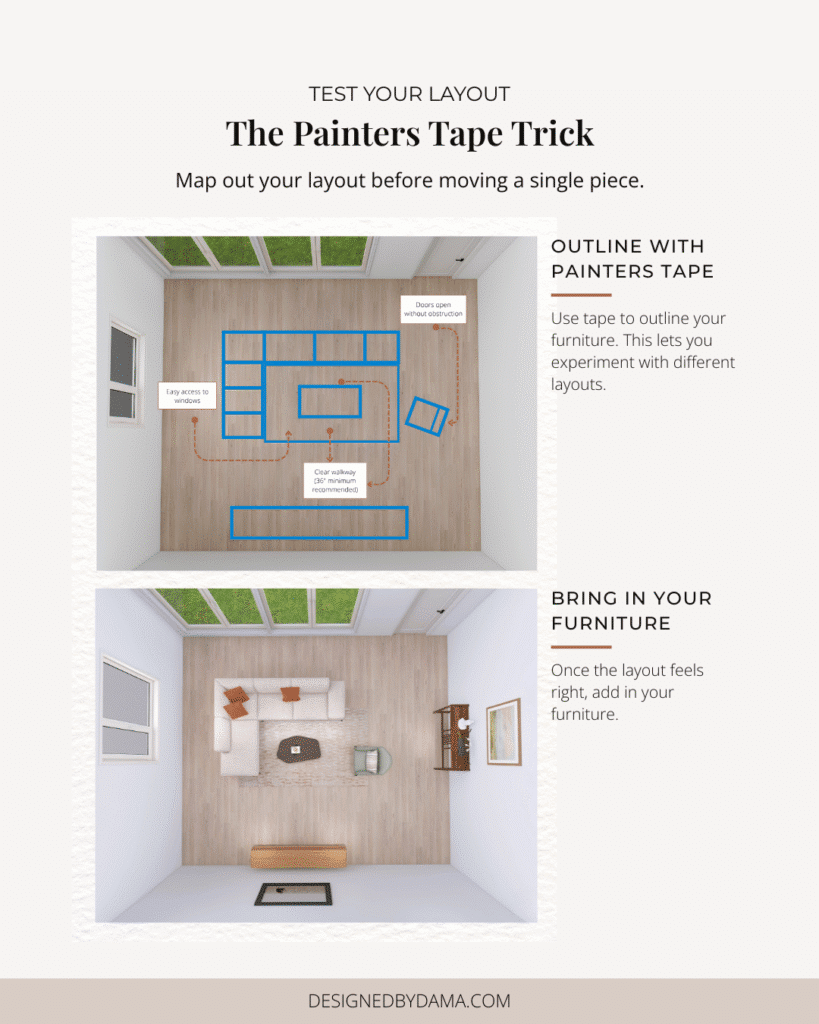
Once you’re happy with the layout, take your time finding the right pieces. A quality sofa is worth the wait. Then add the finishing layers (rug, throw pillows, décor) once the big pieces are in place. Always measure before you buy anything large.
Step 6: Create a Home Office That Supports You
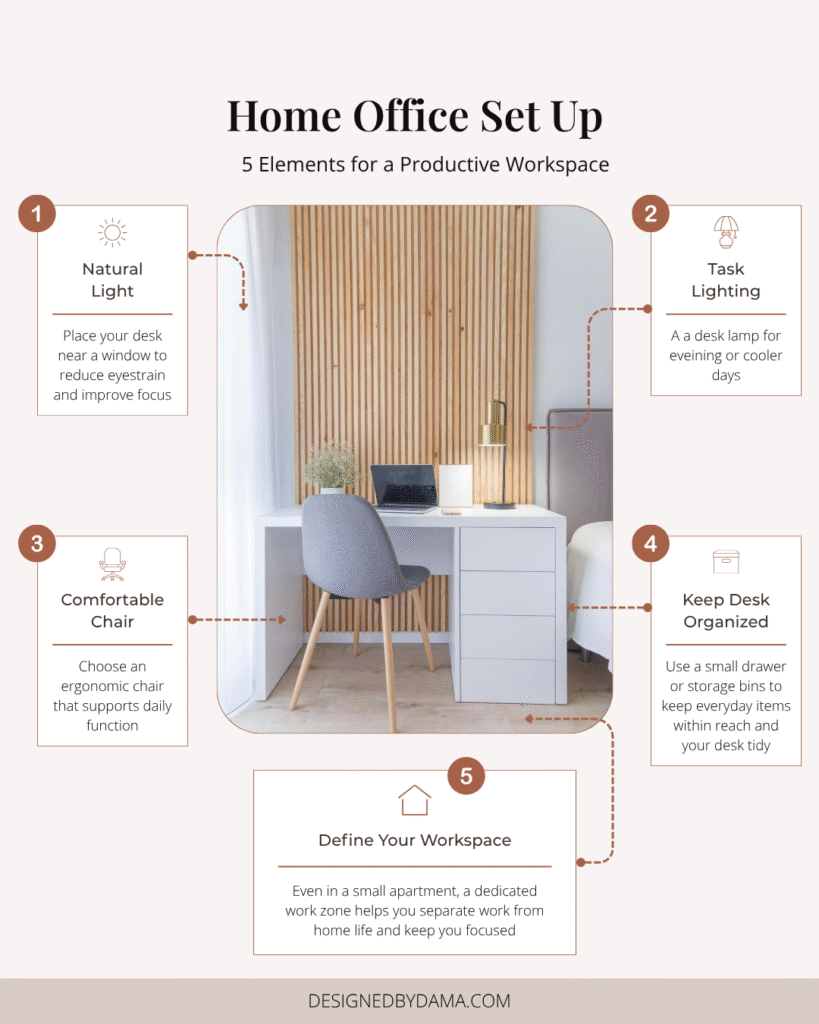
If you work from home, your workspace needs to do more than just hold a laptop; it needs to help you focus.
Find a dedicated spot, even if it’s just a corner, and treat it like its own zone. A few things make the biggest difference: good lighting (natural light, if possible, a quality lamp if not), a chair that’s comfortable for long hours, and keeping work items contained to that area so your brain knows when you’re “at work” and when you’re not. That mental separation matters more than most people realize.
I put together a full guide on setting up a home office if you want to go deeper.
Step 7: Add Personality Through Décor
Now for the part everyone gets excited about. Once the essentials are handled, this is where your space starts to feel like you.
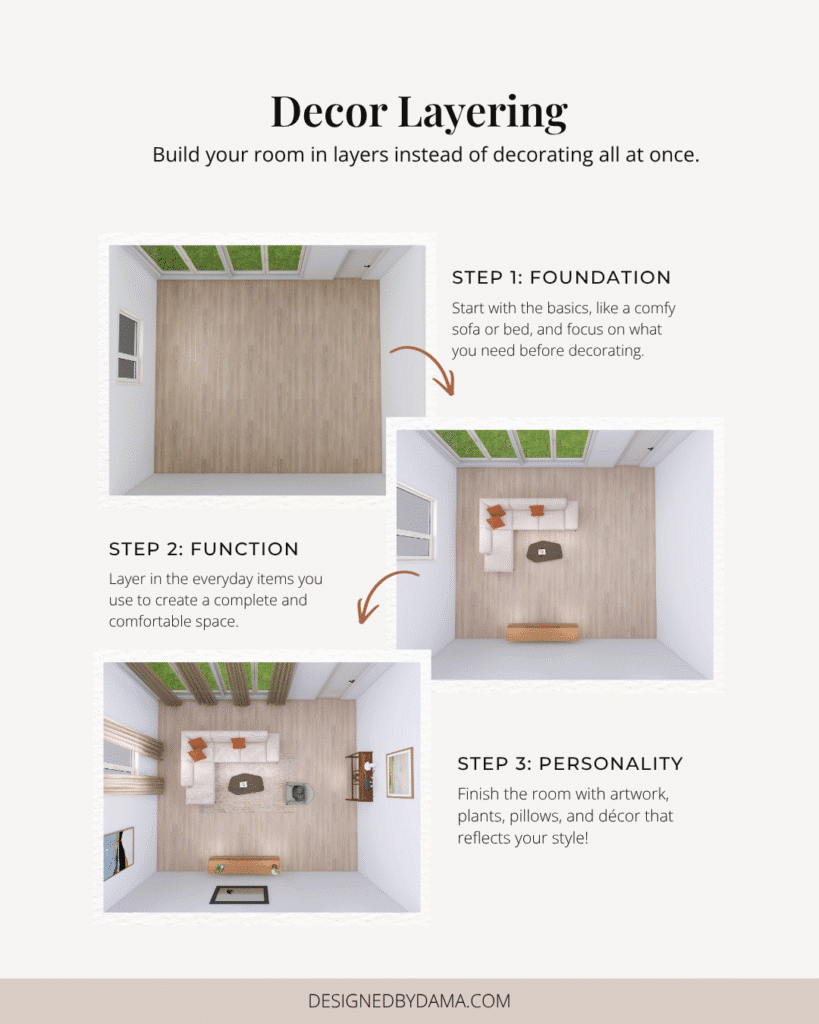
Think in layers. Start with your largest statement piece like a piece of wall art, a textured throw, or a statement plant. Then build around it with smaller objects: a candle, a frame, a small sculpture, something personal. Step back often and look at the overall picture rather than each item in isolation.
One thing to remember: leave breathing room. Not every wall needs something on it, and not every surface needs to be filled. Empty space lets your eye settle and appreciate what is there.
Your Apartment, Your Pace
Setting up a new apartment doesn’t have to feel overwhelming. When you start with function (getting each room working the way you need it to), the decorating part becomes so much easier. You’re not placing things randomly; you’re layering personality on top of a space that already makes sense.
Take it one room at a time, give yourself grace along the way, and remember: your apartment doesn’t have to be finished to feel like home. It just needs to feel like you. I’d love to see how your space comes together! Leave a comment below so I can cheer you on. And if this guide was helpful, save it for later or share it with a friend who’s in the middle of a move.
FAQs: Frequently Asked Questions
What should I do first when I move into a new apartment?
Start by cleaning the space before you unpack anything. Then set up your bedroom so you have somewhere comfortable to rest while you work through the rest of the apartment. Having a made bed to come back to at the end of each long day makes the whole process feel so much more manageable.
How do I decorate a new apartment on a budget?
Prioritize the big-ticket essentials first, like a quality mattress and a sofa that will last. Then fill in the décor over time. Thrift stores, Facebook Marketplace, and Amazon are great for finding affordable pieces that still look intentional. You don’t have to do it all at once, and honestly, the spaces that come together gradually often feel the most personal.
How do I choose the right color palette for my apartment?
Start with how you want to feel in each room. Bedrooms and living spaces tend to work best with calm, grounding tones. Stick to 3 to 4 colors per room (a main color, a secondary, and a contrast) and use a free online color palette generator to experiment before committing. When in doubt, neutrals are always a safe and timeless foundation.
How do I choose the right size furniture for my space?
Always measure before you buy. I like to use painters’ tape on the floor to map out the footprint of large pieces such as sofas, beds, and dining tables. It takes a few minutes and saves you from a very expensive mistake. A piece that looks perfect online can completely overwhelm a room if the scale is off.
How do I make a small apartment feel bigger?
Light, neutral walls go a long way. Choosing furniture with visible legs creates a sense of airiness. Mirrors are great for reflecting light and opening up a space visually. And keeping surfaces clear by resisting the urge to fill every shelf makes more of a difference than most people expect.
How long does it take to fully set up a new apartment?
Most people have the essentials sorted within the first few weeks. But give yourself time. There is no rush and the process of slowly making a space yours is the fun part.